
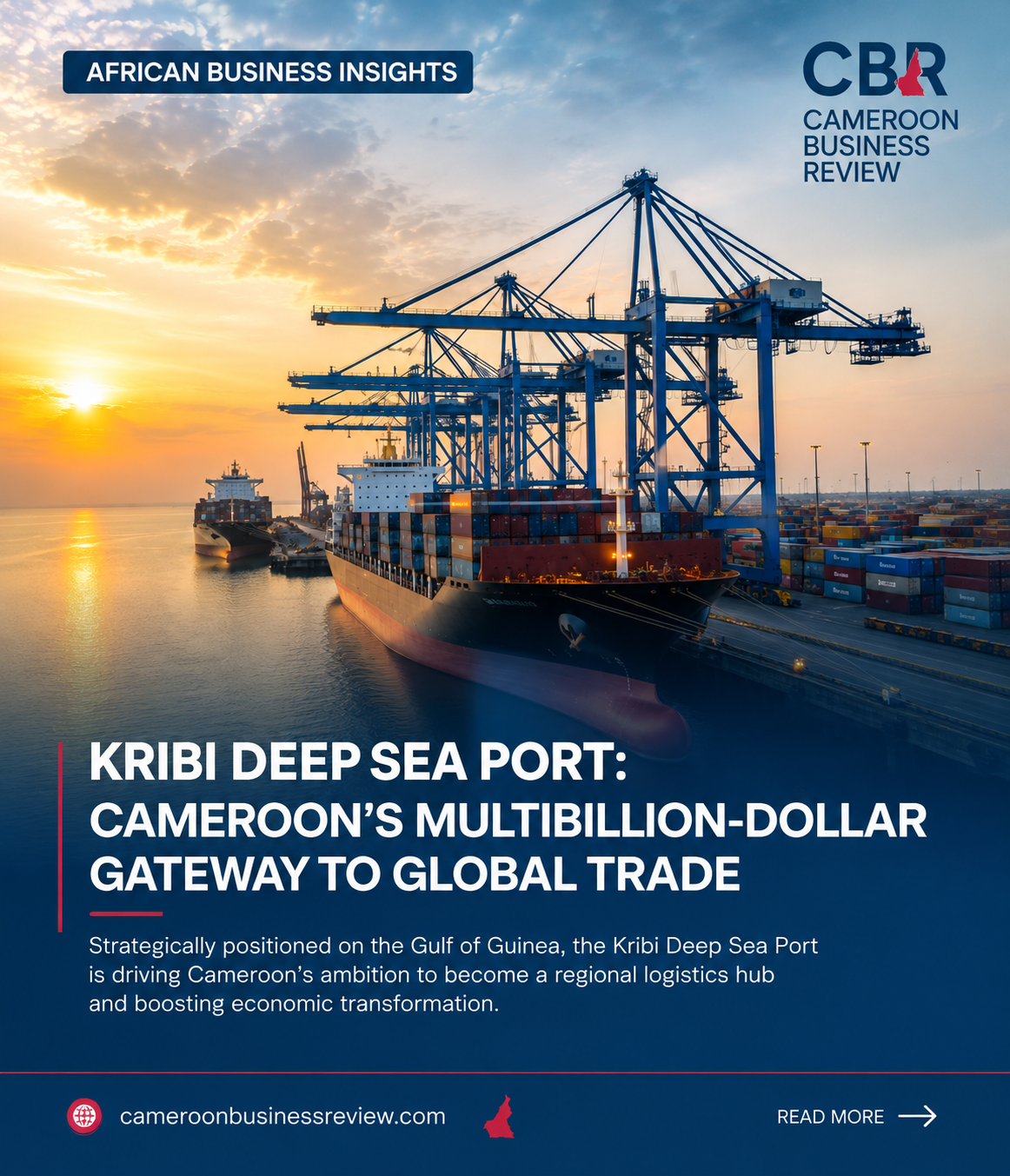
Kribi Deep Sea Port: Transforming Trade and Logistics in Central Africa
For decades, Cameroon has occupied a strategic position as the gateway to Central Africa. Its geographic location, combined with access to the Atlantic Ocean, has made the country an important transit point for goods destined for landlocked neighbors such as Chad and the Central African Republic. However, increasing trade volumes, growing industrial activity, and congestion at existing transport hubs created an urgent need for modern infrastructure capable of supporting long-term economic growth.
The development of the Kribi Deep Sea Port represents one of Cameroon’s most ambitious infrastructure projects and marks a significant milestone in the country's economic transformation. Designed to accommodate larger vessels and increase cargo handling capacity, the port is expected to strengthen Cameroon’s competitiveness, facilitate regional trade, and attract new investment across multiple sectors.
As governments and businesses across the Central African Economic and Monetary Community (CEMAC) continue to prioritize regional integration, Kribi is increasingly emerging as a strategic logistics hub with the potential to reshape trade flows throughout the region.
Why Kribi Matters
Unlike the Port of Douala, which operates along the Wouri River and faces navigational limitations, Kribi benefits from naturally deep waters that allow it to receive larger cargo vessels without extensive dredging.
This capability offers several advantages, including:
Faster vessel turnaround times
Increased cargo handling capacity
Reduced congestion
Lower logistics costs
Improved efficiency for importers and exporters
Greater competitiveness for regional trade
The port was designed with future expansion in mind, allowing Cameroon to accommodate growing international trade while positioning itself as one of Central Africa's leading maritime gateways.
Supporting Cameroon’s Industrial Development
Kribi is more than a commercial port. It has become the centrepiece of a broader industrial development strategy aimed at increasing domestic production, encouraging exports, and attracting foreign direct investment.
Several large-scale industrial projects have been established or planned around the port, creating opportunities in sectors such as:
Steel production
Cement manufacturing
Timber processing
Mining
Agro-processing
Energy
Logistics and warehousing
The availability of modern port infrastructure reduces transportation costs for manufacturers while making locally produced goods more competitive in international markets.
As industrial clusters continue to develop around Kribi, the surrounding region is expected to experience increased employment opportunities and accelerated urban development.
Strengthening Regional Trade
Cameroon serves as a transit corridor for several neighboring countries. Efficient port operations are therefore essential not only for domestic commerce but also for regional economic integration.
Kribi enhances connectivity by facilitating trade with:
Chad
Central African Republic
Republic of Congo
Gabon
Equatorial Guinea
Other CEMAC member states
Improved logistics infrastructure can shorten delivery times, reduce transportation expenses, and increase supply chain reliability for businesses operating across borders.
For exporters seeking access to international markets, these improvements enhance Cameroon’s attractiveness as a regional trade hub.
A Catalyst for Investment
Infrastructure projects of this scale often generate significant investment opportunities beyond the transport sector.
Kribi's continued development is expected to stimulate investment in:
Industrial parks
Logistics companies
Warehousing facilities
Real estate development
Hospitality
Transport services
Cold chain infrastructure
Renewable energy
International investors generally consider efficient logistics infrastructure a key factor when evaluating new markets. As port operations continue to expand, Cameroon may become increasingly attractive to businesses seeking to establish regional distribution centers.
Opportunities for Export-Oriented Industries
Cameroon possesses considerable export potential across several industries.
These include:
Cocoa
Coffee
Timber
Cotton
Bananas
Palm oil
Rubber
Aluminium
Minerals
Efficient port operations improve exporters' ability to access international markets while reducing transportation costs and delivery times.
As global demand continues to grow for agricultural and mineral resources, improved logistics infrastructure becomes an important competitive advantage.
The Importance of Multimodal Connectivity
While modern port facilities are essential, their full economic impact depends on efficient connections to inland markets.
Road and rail infrastructure linking Kribi to major commercial centers remain critical components of the country's logistics strategy.
Continued investment in:
Highways
Rail transport
Inland logistics hubs
Customs modernization
Digital cargo tracking
will determine how effectively goods move between ports, industrial zones, and neighboring countries.
A fully integrated logistics network would significantly enhance regional competitiveness while supporting the objectives of the African Continental Free Trade Area (AfCFTA).
Challenges That Remain
Despite significant progress, several challenges continue to influence the pace at which Kribi reaches its full potential.
These include:
Limited rail connectivity
Road infrastructure gaps
Customs processing efficiency
Logistics costs
Skills shortages
Environmental sustainability
Coordination among public and private stakeholders
Addressing these issues will require sustained investment, policy reforms, and collaboration between government agencies and private sector participants.
Looking Ahead
The continued expansion of Kribi Deep Sea Port is expected to play a pivotal role in Cameroon’s long-term development strategy.
Future priorities are likely to include:
Increasing container handling capacity
Expanding industrial zones
Improving digital port management systems
Strengthening multimodal transport networks
Encouraging private sector participation
Enhancing regional trade integration
As these developments progress, businesses operating in manufacturing, agriculture, logistics, mining, and international trade will find increasing opportunities to improve operational efficiency and expand into regional markets.
Final Thoughts
The Kribi Deep Sea Port is more than an infrastructure project—it represents a strategic investment in Cameroon’s future as a regional trade and logistics leader. Its ability to accommodate larger vessels, support industrial development, and strengthen regional connectivity positions it as one of the country's most significant economic assets.
Realizing its full potential, however, will depend on complementary investments in transport infrastructure, customs modernization, and industrial development. If these efforts continue, Kribi could become a major driver of economic diversification, export growth, and regional integration, reinforcing Cameroon’s role as a gateway to Central Africa for decades to come.
Internal Linking Suggestions
Cameroon Banking Sector in 2026: Trends, Outlook and Opportunities
CEMAC Economic Outlook 2026
Agribusiness Export Opportunities in Cameroon
Cross-Border Trade in Central Africa
How Infrastructure Is Shaping Investment in Cameroon